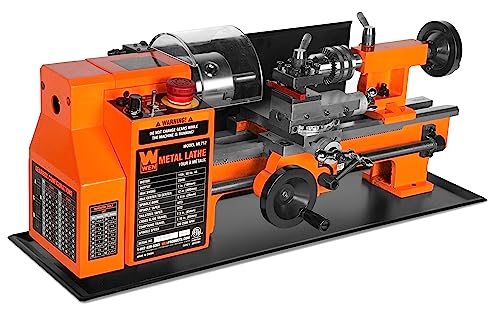
For a first machine, a 7x14 like the VEVOR 7x14 mini lathe at $475.92 covers small parts, bushings and hobby turning without the bench space or price of a mill. Buy the lathe before anything else in the shop, then add tooling as specific projects demand it rather than buying every accessory up front.

VEVOR Metal Lathe 7x14inch Precision Bench Top Mini Metal Lathe 550W...
Check price on Amazon
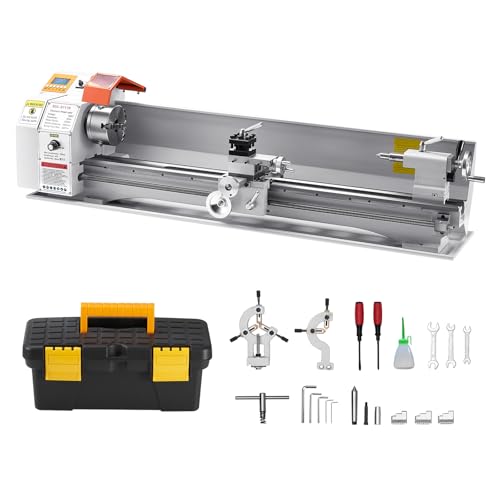
VEVOR 7'' x 16'' Metal Lathe Machine
Check price on AmazonWhat does swing and bed length actually mean?
Swing is twice the distance from the spindle centerline to the bed ways, so it sets the largest diameter that can spin without hitting the bed. A 7 inch swing lathe turns roughly 3.5 inch radius stock over the bed, less near the headstock where the chuck jaws intrude. Bed length between centers sets the longest part, minus whatever the chuck and tailstock eat into.
A 7x14 machine like the VEVOR 7x14 mini lathe handles most hobby work: bushings, shafts, small fixtures, model engine parts. An 8x16 like the VEVOR 7x16 metal lathe adds headroom for slightly larger stock and longer parts without jumping to a full size machine. See 7x14 vs 8x16 mini lathe for the direct tradeoff.
The published swing number is measured over the bed ways, which is the largest diameter the carriage and cross slide can clear. The real usable swing over the cross slide, meaning the largest part that can be faced or turned with the compound engaged, runs noticeably smaller, often an inch or more less than the headline spec. Read the fine print on any listing that advertises a large swing number, since the over-bed figure alone can be misleading for planning an actual project.
| Spec | Typical 7x12/7x14 | Typical 8x16 |
|---|---|---|
| Swing over bed | 3.5 in radius | 4 in radius |
| Distance between centers | 12-14 in | 16 in |
| Motor | 500-600W | 650-800W |
| Spindle bore | Small, often under 20mm | Slightly larger |
| Typical price | $450-$650 | $600-$750 |
What RPM range and motor size does a beginner need?
Variable speed from roughly 50 to 2,500 RPM covers everything a beginner cuts: aluminum at higher speeds, steel and brass at lower ones. Use the RPM calculator to convert surface feet per minute and stock diameter into a real spindle speed before touching the dial. See cutting speed explained for the SFM numbers behind that math.
A brushed 500 to 650 watt motor is enough for turning tool bits in aluminum, brass and mild steel at hobby depths of cut. Do not chase horsepower specs from mill-sized machines; a mini lathe motor is sized for its own gearing, not for taking the same cuts as a 10 inch swing machine.
Variable speed control on most mini lathes comes from an electronic motor controller rather than a purely mechanical belt and pulley system, which is why the low end of the range can bog down under a heavy cut even though the dial says it should still be turning. If a cut stalls the spindle at very low RPM, it is usually faster and more reliable to raise the speed slightly and take a lighter depth of cut than to fight the low end of the range.
Metal gears or nylon gears for the change gear train?
The change gear train sets feed rate and thread pitch. Metal gears last longer under sustained cutting and threading loads; nylon gears run quieter and are common on the least expensive machines. For a hobbyist doing occasional threading, nylon gears are acceptable, but metal gears are worth the modest price step up if threading will be a regular task. Check the change gear calculator and the mini lathe change gear chart once a machine is chosen, since gear sets are model specific.
Should a first machine be a lathe or a mill?
Buy the lathe first. Amazon sales data on this category is blunt about it: mini lathes in the $450 to $650 range sell dozens of units a month, while benchtop mills over $1,600 barely move. A lathe alone builds shafts, bushings, threaded rod, knobs and most single-part fixes a hobby shop needs. A mill adds flat, square and slotted work, which most beginners do not need on day one.
Once turning skills and project needs justify it, a mill rounds out the shop. Until then, spend the upgrade budget on tooling that makes the lathe more capable: see mini lathe first upgrades.
What comes in the box, and what should be bought separately?
Most mini lathes ship with a 3-jaw chuck, a tool post, a set of change gears, and sometimes a basic cutter kit. They rarely ship with quality measuring tools, a 4-jaw independent chuck, or a full set of turning inserts. Budget separately for a digital caliper, a set of turning tools, and eventually a quick change tool post to replace the stock single tool post.
| Usually included | Usually not included |
|---|---|
| 3-jaw chuck | 4-jaw independent chuck |
| Basic tool post | Quick change tool post |
| Change gear set | Digital caliper or micrometer |
| Chuck key, wrenches | Cutting fluid |
What listing details separate a decent mini lathe from a poor one?
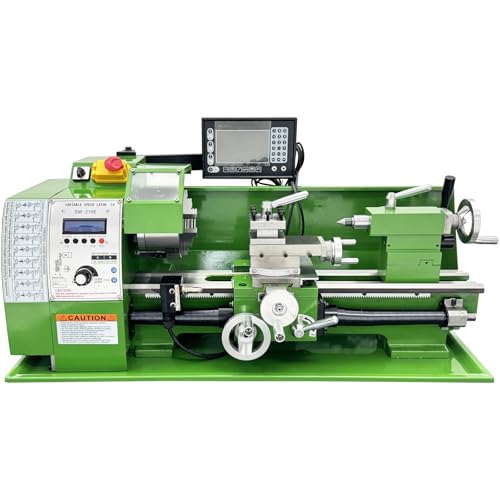
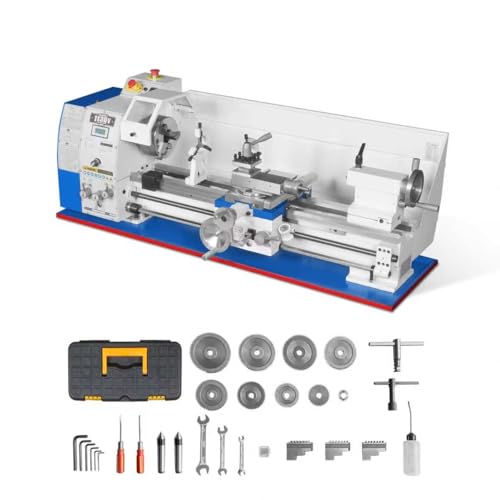
Product photos and headline specs look nearly identical across many budget mini lathe listings, so the differences that matter are buried further down. Check whether the listing states a spindle bore diameter, since a larger bore lets bar stock pass through the headstock for repeat parts without pulling the chuck; many entry machines have a bore under 20mm, which limits that workflow.
Also check whether the listing mentions metal versus nylon change gears, whether a digital display or RPM readout is included, and what accessories actually ship versus what is shown in a lifestyle photo. Owner reviews mentioning runout, backlash in the handwheels, or gear noise are more useful signal than the star rating alone, since those specifics point to build quality issues that a five-star average can still hide among the highest-volume budget sellers.
Shop the tools for this
An even spread across the price range, cheapest to premium.


Frequently asked questions
Is a 7x14 mini lathe big enough for real projects?
Yes for the large majority of hobby work: small engine parts, bushings, shafts, knobs, threaded fittings and fixture repair. It will not swing large flywheels or turn parts longer than about a foot, but those jobs are a small share of what most home shops actually build.
How much does a decent mini lathe cost?
Reasonable 7x14 machines start around $475 to $650, which is also the range with the strongest sales velocity on Amazon. Machines priced well under that often cut corners on the motor, bearings or gearing; machines well above it start overlapping benchtop mill money before a beginner needs that capability.
Does a mini lathe need a dedicated 220V circuit?
No. Nearly all mini lathes in the hobby price range run on standard 110-120V household circuits. Check the specific listing, since a small number of larger benchtop machines step up to 220V, but that is unusual below the 10 inch swing class.
Can a mini lathe cut metric and inch threads both?
Most can, through gear changes, but not always at the same time without a gear swap or a leadscrew feature built for both systems. Check the specific machine listing for its thread pitch range and consult the thread pitch chart before assuming a given pitch is reachable.
What is the single most important first accessory to buy?
A digital caliper. Every measurement on a lathe, from stock diameter to finished part size to depth of cut tracking, depends on being able to measure accurately and quickly. See best digital caliper for picks across price tiers.
Keep going
Researched from published specifications, standards and verified owner reviews. Not professional advice. How we research.