RPM = (SFM x 12) / (pi x diameter), which shop charts shorten to RPM = 3.82 x SFM / diameter in inches. A 1 inch 1018 steel bar turned with HSS at 100 SFM runs at about 382 RPM; the same bar in 6061 aluminum at 250 SFM runs at about 955 RPM.
D is the diameter that is cutting: the workpiece diameter on a lathe, the cutter diameter on a mill or drill press. The surface speeds are conservative starting points for hobby machines; raise them when the finish and the chips tell you the setup can take it.
Tools for this job
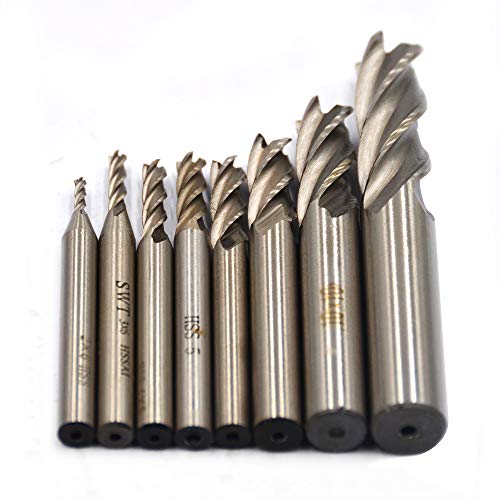
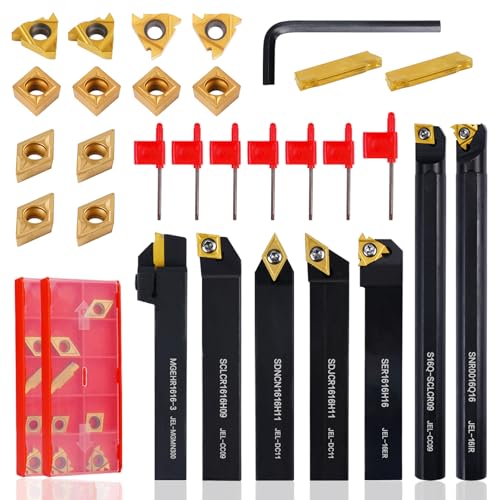
The tooling this calculation is usually for, spread across the price range.




How does the rpm calculator work?
Surface speed is how fast the metal moves past the cutting edge, in feet per minute. Every tool and material pair has a speed range where the edge cuts cleanly without overheating. Spindle RPM is just the way you dial that speed in, and it depends on diameter: the same RPM moves the rim of a 3 inch bar three times faster than a 1 inch bar.
That is why RPM must drop as diameter grows, and why a facing cut speeds up at the edge and slows at the center. On a hobby lathe with a belt or a variable speed dial, pick the nearest speed at or below the figure here.
Frequently asked questions
What does 3.82 mean in the RPM formula?
It is 12 divided by pi, rounded. Surface speed is in feet per minute while diameter is in inches, so you multiply by 12 to convert feet to inches and divide by pi times the diameter to get revolutions. RPM = 3.82 x SFM / D gives the same answer as the long form to within about a tenth of a percent, which is far more precise than any starting speed chart.
Should I use the workpiece or the tool diameter?
Use whichever one is spinning and cutting. On a lathe the work spins, so use the diameter of the workpiece where the tool is cutting. On a mill or a drill press the cutter spins, so use the end mill or drill diameter. For boring on a lathe, use the bore diameter being cut.
What if my lathe cannot reach the calculated RPM?
Run at your top speed. The only consequence of running slower than ideal is a lower surface speed, which means a slower job and sometimes a slightly worse finish in aluminum. Running faster than ideal is what burns tool edges, so being speed limited on a small machine is safe.
Keep going
Formulas are standard shop math; starting speeds are conservative conventions for hobby machines. Not professional engineering advice. Wear eye protection and keep hands, gloves and sleeves clear of rotating work.