On a lathe, TPI cut = leadscrew TPI x (B/A) x (D/C) for a compound A-B-C-D train. With a 16 TPI leadscrew and the standard 7x gear set, 20 TPI comes from A=20, B=20, C=40, D=50 (16 x 1 x 1.25 = 20 exactly), and 13 TPI from A=40, B=20, C=40, D=65. The calculator searches every combination in your set and ranks them by error.
Error under 0.5% is fine for any normal thread length.
Gear A is on the spindle-driven shaft, B and C share the compound stud, D is on the leadscrew. Physical fit of the train on the banjo is not checked here.
Assumes the gear A shaft turns 1:1 with the spindle, as on 7x mini lathes in their standard configuration. If your lathe has an internal reduction before the change gears, multiply the leadscrew TPI by that ratio first. Always check against the chart printed on your machine.
Tools for this job
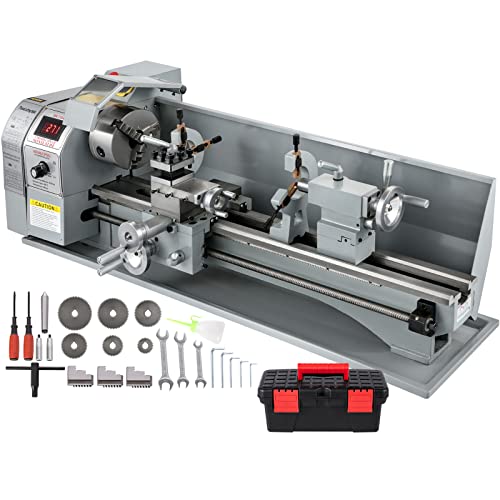
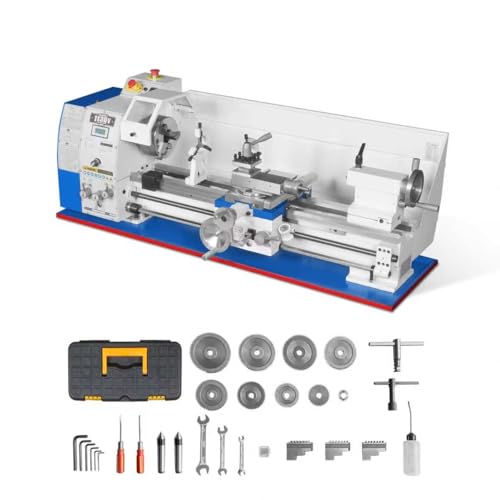
The tooling this calculation is usually for, spread across the price range.


How does the change gear calculator for thread cutting work?
Threading on a lathe locks the carriage to the spindle through the leadscrew, so the thread pitch is set entirely by the gear ratio between them. A compound train of four gears multiplies two ratios together, which is how a small set of about a dozen gears reaches every common inch thread and most metric ones.
Frequently asked questions
Can an inch leadscrew cut exact metric threads?
Only with a 127 tooth gear, because 127 is the prime factor that converts inches to millimeters (25.4 = 127 / 5). Without it, the standard 7x gear set gets within a small fraction of a percent on common metric pitches, which is fine for short threads. For a long metric thread, a 127T gear or a metric leadscrew lathe is the answer.
Why does the calculator reject using the same gear twice?
Each gear position needs a physical gear. If your set has two of a size (the 7x set includes two 20T and two 40T), list it twice and the calculator will use both. Listing a gear once means it can only occupy one position.
Keep going
Formulas are standard shop math; starting speeds are conservative conventions for hobby machines. Not professional engineering advice. Wear eye protection and keep hands, gloves and sleeves clear of rotating work.