Feed rate (IPM) = RPM x number of flutes x chip load per tooth. A 1/4 inch 2 flute HSS end mill in 6061 aluminum at 3,000 RPM and 0.0025 inch per tooth feeds at 15 inches per minute.
Speed limited by the machine: the ideal is 3820 RPM. Keep the chip load, which keeps the cutter cutting rather than rubbing.
The chip load suggestion scales with cutter diameter, because a larger cutter has a stronger tooth. On a light hobby mill start at the suggestion and reduce if you hear chatter.
Tools for this job
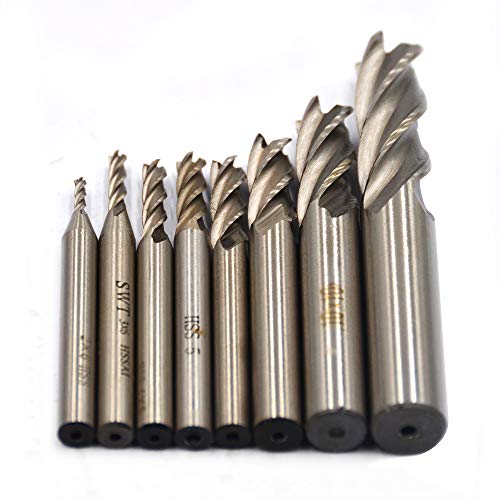
The tooling this calculation is usually for, spread across the price range.


How does the feed rate calculator work?
Chip load is the thickness of metal each cutting edge removes per revolution. Too thin and the edge rubs, heats and dulls, which is how most hobby end mills die in stainless. Too thick and the tooth chips or the cutter snaps. Feed rate is simply chip load times the number of teeth times how fast they come around.
If your machine cannot reach the ideal RPM, keep the chip load and let the feed drop in proportion. That is the one adjustment that keeps a slow spindle cutting properly.
Frequently asked questions
How many flutes should an end mill have for aluminum?
Two or three flutes. Aluminum makes large, sticky chips that need room in the flute to escape; a four flute cutter packs its flutes and welds chips to the edges. For steel, four flutes are normal because the chips are smaller and the extra teeth spread the cutting load, which gives a better finish at the same feed.
Why does the calculator suggest such a small chip load?
Published chip loads assume rigid industrial machines. A benchtop mill or a milling attachment on a lathe flexes, so these starting values sit at the conservative end. If the cut is quiet and the chips are clean and not blue, raise the feed in steps of about 20 percent.
What happens if I feed too slowly?
The edge rubs instead of cutting. In mild steel that dulls the cutter, and in stainless it work hardens the surface so the next pass is cutting a harder skin. A slightly aggressive feed with a shallow depth of cut is almost always better than a timid feed.
Keep going
Formulas are standard shop math; starting speeds are conservative conventions for hobby machines. Not professional engineering advice. Wear eye protection and keep hands, gloves and sleeves clear of rotating work.