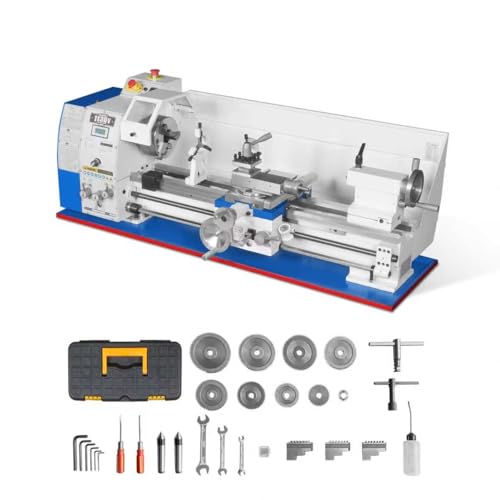
For most first shops, the VEVOR 7x14 mini lathe with digital display at $609.90 gives enough bed length and RPM range for real parts without paying for a benchtop machine you do not need yet.

VEVOR 7"x14" Metal Lathe
The 7x14 class is the true starting point for hobby metalworking: long enough to turn a 10 inch shaft between centers, short enough to fit on a workbench, and priced so a first mistake does not sting. This VEVOR carries a digital RPM readout on the headstock, a 0 to 2500 RPM variable speed range, and the same 550W motor and metric and imperial thread capability found across the class. Buyers researching this size consistently want a lathe they can face, turn, drill, and cut basic threads on within the first weekend, and the digital display removes one of the biggest early frustrations: guessing spindle speed from a dial. It will not out-cut a bigger benchtop lathe on stock over 1.5 inches in diameter, but for the parts a home shop actually makes, it is the size and price point where sales concentrate.
Check price on AmazonThe three picks at a glance
| Tier | Pick | Price |
|---|---|---|
| Beginner | VEVOR Metal Lathe 7 x 12 Inch | $476.91 |
| Intermediate | Metal Lathe 7" x 14" | $619.99 |
| Expert | VEVOR 7'' x 16'' Metal Lathe Machine | $679.90 |
Beginner: Best first lathe
Who it is for: Someone who has never owned a metal lathe and wants to learn facing, turning, and drilling on small parts before spending more.

VEVOR Metal Lathe 7 x 12 Inch
The 7x12 class is the lowest-cost real entry point into metal turning. This VEVOR runs 2250 RPM variable speed on a 550W motor, ships with the tooling to start cutting the same day, and keeps the bed short enough that swing and rigidity are not stretched thin. It is the lathe to learn indexing, tool height, and basic threading on before deciding whether the hobby sticks.
Check price on AmazonSkip it if: Anyone planning to turn stock longer than about 10 inches between centers, or parts over 3.5 inches in diameter. The short bed and light frame will flex and chatter past that.
Intermediate: Buy once
Who it is for: A hobbyist who already knows they will keep making parts and wants a 7x14 with a full-size 4 inch chuck instead of upgrading twice.

Metal Lathe 7" x 14"
This is a 7x14 with a 4 inch 3-jaw chuck rather than the smaller 3.15 inch chuck common at this size, which matters the first time you try to hold a piece of round stock near the chuck jaws capacity. The 2 inch longer bed over the 7x12 class means more between-centers work and more room for a steady rest. Variable speed to 2500 RPM covers everything from parting off soft aluminum to light steel turning.
Check price on AmazonSkip it if: Buyers who already know they want to turn parts over 6 inches in diameter or run production quantities; that work belongs on the benchtop class, not a 7x14.
Expert: Performance ceiling for this class
Who it is for: A hobbyist who wants the biggest, most powerful machine that still counts as a mini lathe rather than stepping up to a benchtop model.

VEVOR 7'' x 16'' Metal Lathe Machine
At 7x16 with an 800W motor, this VEVOR is the top of the mini lathe class before the jump to 8 inch swing benchtop machines. The larger 3.9 inch 3-jaw chuck and the extra 2 inches of bed length over a 7x14 add real capacity for longer shafts, and the higher-wattage motor holds RPM under load on steel far better than the 550W lathes at the bottom of this list. It comes with its own tool box of included tooling, which offsets some of the price gap over the 7x14 class.
Check price on AmazonSkip it if: Anyone on a strict first-lathe budget. The jump from a 7x14 to this machine is real money for capability most beginners will not use in year one.
What size mini lathe do most home shops actually need?
The 7x12, 7x14, and 7x16 designations describe swing over bed (the largest diameter the lathe can turn) and distance between centers (the longest piece it can hold end to end). A 7x14 swings about 7 inches and holds up to 14 inches between centers, which covers most hobby work: bushings, shafts, small tooling, model parts, and repair work.
Buyer data backs this up directly. Machines in the 450 to 700 dollar range in this size class sell 50 or more units a month on Amazon, while benchtop lathes above 1,600 dollars barely move. Most people buying a first metal lathe are testing the hobby, not equipping a production shop, and the 7x12 to 7x16 class is sized and priced for that decision.
| Size class | Typical swing | Typical bed length | Best for |
|---|---|---|---|
| 7x12 | ~3.5 in over bed | ~10 in between centers | First lathe, small parts |
| 7x14 | ~3.5 to 4 in | ~12 in between centers | Most hobby work |
| 7x16 | ~4 in with larger chuck | ~14 in between centers | Longer shafts, more power |
How much RPM range and motor power do you actually use?
Every lathe in this class advertises a variable speed range, usually 0 to 2250 or 0 to 2500 RPM, driven by a 500 to 800 watt motor. In practice, aluminum and brass get turned in the 1,200 to 2,000 RPM range with a sharp HSS or carbide bit, while mild steel drops to 400 to 900 RPM depending on diameter. Use a RPM calculator to convert surface feet per minute for your material into a target spindle speed; guessing speed is a common cause of chatter and short tool life on a new lathe.
Motor wattage matters most under load: a 550W motor will bog down turning 1 inch steel at aggressive depth of cut, where an 800W motor holds speed. If most projects are aluminum, brass, and light steel, 550W is enough. If you plan to turn steel regularly at larger diameters, the extra power on a 7x16 pays off in fewer stalled cuts.
What should ship with the lathe versus what you buy separately?
Every model here includes a 3-jaw chuck, a tool post, and typically a small set of turning tools or a starter cutter kit. What is rarely included and always needed soon after: an OXA quick change tool post set to swap tools without re-setting center height, and a dead center or live center for work held between centers.
Budget for tooling on top of the machine price. A 200 to 300 dollar lathe with no usable tool holder wastes more time than it saves; the 450 to 700 dollar machines above already account for that by shipping enough to start cutting, but a proper tool post upgrade is usually the first purchase after the lathe itself.
Threading: what to check before you buy
Most machines in this class cut both metric and imperial threads through a change gear train, but the specific pitches available vary by model. Before ordering, check the listing for the change gear chart or supported pitch range, and keep a mini lathe change gear chart on hand once the machine arrives so you are not recalculating gear combinations from scratch for every job. The thread pitch converter and tap drill calculator both save real time once you are cutting threads regularly.
Also worth considering
- Erie Tools 7 x 14 Precision Bench Top Mini Metal Milling Lathe... ($509.99): Erie Tools 7x14 that ships with a digital readout and a 5 piece cutter kit already in the box, at $509.99.
- Mini Lathe Machine ($599.00): SHENGJINSH 7x14 with a 3-jaw chuck and the same 0 to 2500 RPM range for $599.00 if the VEVOR brand pick is out of stock.
- VEVOR Metal Lathe Machine ($539.71): VEVOR 7x13.78 with metal gears and a toolbox of accessories for $539.71, a middle ground inside the 7x14 class.
More options across the price range
Chosen as an even spread from the cheapest to the most expensive listing in this category.


How we chose
Every lathe above is pulled from the verified Amazon catalog for this site: real ASINs, real published prices, and real listed specifications (bed length, swing, motor wattage, RPM range, chuck size). Nothing here reflects hands-on shop time; the picks are built from manufacturer specifications, listing details, and patterns across verified owner reviews.
The 450 to 700 dollar band was chosen because it is where sales volume actually concentrates in this size class, based on purchase-frequency signals on the listings themselves. Machines above that band exist and are noted as also-consider options, but they compete on a different buyer decision (benchtop versus mini lathe) rather than within this class.
Buying tips
Is a 7x12 too small for a first lathe?
No. It is the right size if your projects are small parts and you are still learning tool height, feed rate, and basic threading. Most hobbyists outgrow the bed length before they outgrow what the machine can teach them.
Does a bigger chuck matter more than a longer bed?
For most hobby work, chuck capacity matters more day to day. A 4 inch 3-jaw chuck holds noticeably more stock diameter than the 3.15 inch chucks common on the smallest 7x12 machines, and you will hit that limit before you hit the bed length limit.
Should you buy the cheapest 7x14 or spend more inside the same class?
Spend a little more inside the class if the extra machine includes a digital RPM readout or a larger chuck. Those two features remove the most common early frustrations and are worth 50 to 100 dollars over the bare-minimum listing.
Do you need a stand or bench for a mini lathe?
Yes, and it needs to be solid. A wobbly folding table transmits vibration straight into the cut and shows up as chatter marks on every part. A dedicated steel bench or a bolted-down section of workbench makes a bigger difference than most tooling upgrades.
Get these picks by email
Every item on this page with its current price in one email, so you can buy the shop in stages. No sales sequence.
Used only to send the list.Frequently asked questions
What is the difference between a 7x12, 7x14, and 7x16 mini lathe?
The numbers describe swing (largest turning diameter over the bed) and distance between centers (longest workpiece length). A 7x12 holds shorter parts than a 7x14 or 7x16, and the larger sizes usually pair with bigger chucks and more powerful motors, not just a longer bed.
Can a mini lathe cut metric and imperial threads?
Most models in this class can cut both through a change gear train, but the exact pitches available depend on the gear set included. Check the listing for the supported thread pitch range before buying, and keep a change gear chart handy once the lathe arrives.
What RPM should I use to turn aluminum on a mini lathe?
Aluminum and brass typically turn well between 1,200 and 2,000 RPM with a sharp HSS or carbide bit, depending on stock diameter. Use a surface-speed calculation rather than guessing, since running too slow causes built-up edge and a poor finish on soft metals.
Do mini lathes come with enough tooling to start cutting immediately?
Most ship with a 3-jaw chuck, a basic tool post, and sometimes a small starter cutter set, which is enough to begin facing and turning. A quick change tool post and a live or dead center are the two upgrades almost everyone buys within the first month.
Is a 550W motor enough for turning steel?
A 550W motor handles mild steel at moderate diameters and light depth of cut, but it will bog down on aggressive cuts in larger steel stock. If steel turning is a regular part of your projects, an 800W machine in the 7x16 class holds speed noticeably better under load.
Keep going
Researched from published manufacturer specifications, listing details and verified owner reviews. Not hands-on testing and not professional advice. How we research.