Tap drill = major diameter minus (0.01299 x percent of thread / TPI). For a 1/4-20 at 75% thread that is 0.2013 inch, which is a #7 drill (0.201). For metric, tap drill is roughly major diameter minus pitch: an M6 x 1.0 takes a 5.0 mm drill.
Always check the chart for standard threads: the tap drill pages on this site list the drill every chart uses for each size.
75% thread is the standard for tap drill charts. 60 to 65% is common in stainless and tough alloys, because it cuts tapping torque sharply for a small loss of strength; the joint still breaks the bolt before the thread strips once engagement is at least one diameter.
Tools for this job
The tooling this calculation is usually for, spread across the price range.
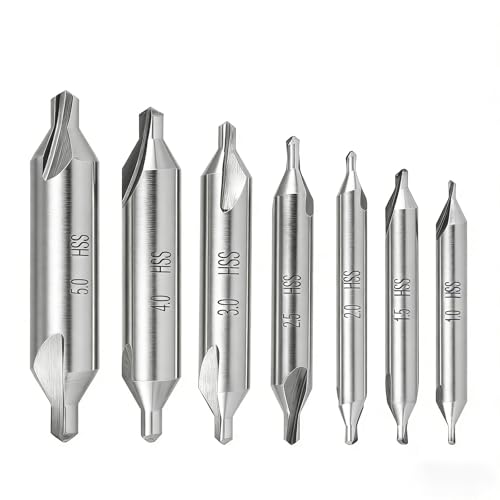


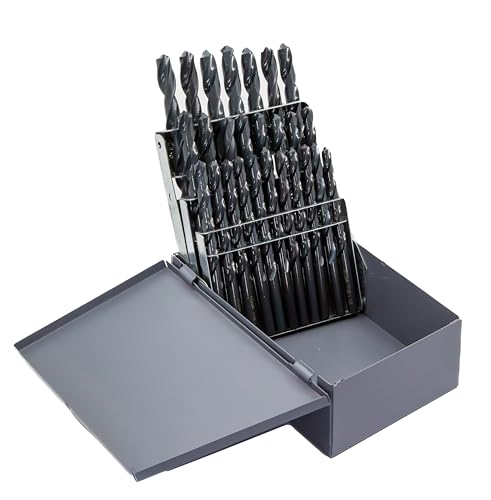


How does the tap drill calculator work?
A tap cuts thread into the wall of a drilled hole. The tap drill decides how much of the thread form is actually there: a smaller drill leaves more metal and a deeper, stronger thread, but it multiplies tapping torque and breaks small taps. 75% thread has about 95% of the strength of a full thread for roughly a third of the torque, which is why every chart uses it.
The formula uses 0.01299, which is 1.299 (the depth factor of a 60 degree unified thread, both flanks) divided by 100 so the percentage can be entered directly.
Frequently asked questions
Why is 75% thread the standard?
Tests on unified threads show that going from 75% to 100% thread adds only about 5% strength while roughly tripling the torque needed to turn the tap. Since a bolt breaks before a 75% thread strips once the engagement length is at least one diameter, the extra depth buys nothing but broken taps. Chart tap drills are all based on 75%.
Should I use a smaller percentage for stainless?
Often, yes. 304 and 316 stainless work harden and grab taps. Dropping to 60 to 65% thread cuts torque a great deal and makes broken taps much less likely, while keeping more than enough strength for most hobby parts. Use a spiral point tap, cutting oil and a steady feel.
Can I use the metric shortcut of major minus pitch?
Yes. For ISO metric threads, major diameter minus pitch gives roughly a 77% thread and is exactly what the standard tap drill charts list: M6 x 1.0 takes a 5.0 mm drill, M8 x 1.25 takes 6.8 mm, M10 x 1.5 takes 8.5 mm.
Keep going
Formulas are standard shop math; starting speeds are conservative conventions for hobby machines. Not professional engineering advice. Wear eye protection and keep hands, gloves and sleeves clear of rotating work.