For most home shops the Yost HD6M 6 inch milling vise at $121.99 is the buy-once pick: a real T-slot mounting base and hardened jaws on a mini mill or a sturdy drill press table, without the industrial price tag.
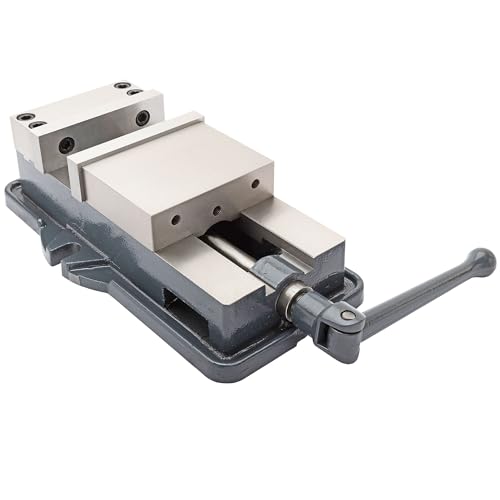
Yost HD6M 6 Inch Milling Machine Vise
The Yost HD6M is a 6 inch milling vise from a long-running American vise maker, sized right for a benchtop or mini mill and for bolting to a drill press table. It has a machined base, hardened and ground jaws, and a jaw opening wide enough for round stock, angle iron and plate. It is not a swivel-base vise, which is the right trade for a hobby shop: fewer moving parts to lose alignment, and one less thing to re-square before every cut. Buyers comparing it against the true industrial vises below consistently note it holds work as flat and square as anything a home shop actually needs.
Check price on AmazonThe three picks at a glance
| Tier | Pick | Price |
|---|---|---|
| Beginner | WEN Drill Press Vise | $26.39 |
| Intermediate | Yost HD6M 6 Inch Milling Machine Vise | $121.99 |
| Expert | Kurt Industrial Crossover Vise - DX6 | $875.00 |
Beginner: Best first vise
Who it is for: Someone whose only workholding right now is a drill press, and who needs to hold round bar, flat stock or a bracket steady for drilling and deburring.

WEN Drill Press Vise
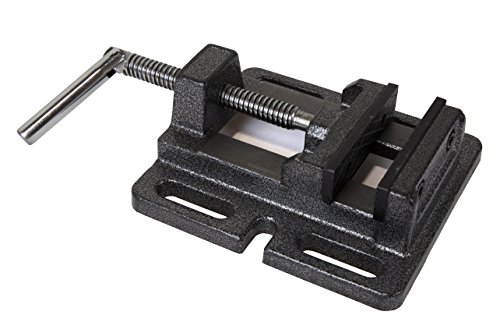
The WEN 4 inch drill press vise bolts straight to a drill press table, opens wide enough for common round and square stock, and costs less than a single carbide end mill. It is not ground to milling tolerances and has some jaw lift under heavy clamping, but for holding a part still while a drill bit or a die grinder does the work, that does not matter.
Check price on AmazonSkip it if: Anyone running a mill, or anyone who needs a part to stay square and parallel across repeated setups.
Intermediate: Buy once
Who it is for: A hobbyist with a mini mill, a mill-drill, or a lathe with milling attachments who wants a vise they will never outgrow.
Yost HD6M 6 Inch Milling Machine Vise
Detailed above. It is the vise most home shops should own: milling-grade squareness, a proper mounting base, and a jaw width that covers the stock sizes a hobby shop actually cuts, at a price that does not compete with the machine tool itself.
Check price on AmazonSkip it if: A shop that only ever drills and deburrs and has no mill; the cheaper drill press vise above does that job for a third of the cost.
Expert: Performance ceiling
Who it is for: A shop with a full-size knee mill or a CNC conversion where tenths-level repeatability across many setups is the actual bottleneck.

Kurt Industrial Crossover Vise - DX6
This is an industrial crossover vise built to the same standard shops use for production tooling: hardened, ground jaws that stay parallel and a lock design meant to hold position through thousands of clamp cycles. It is the vise a machinist reaches for when a part has to come out the same every time, on a machine rigid enough to take advantage of it.
Check price on AmazonSkip it if: A hobby mini mill or mini lathe. Spending more on a vise than the machine cost is backwards for almost every home shop, and this vise needs a rigid table to show its accuracy anyway.
What is the difference between a drill press vise and a milling vise?
A drill press vise is built to hold a part still against downward drilling pressure. It usually has a stamped or cast base, jaws that are square enough for drilling but not ground flat, and no real provision for holding position under sideways cutting loads.
A milling vise is a heavier, machined casting with hardened and ground jaws, a base machined flat and parallel to the jaws, and mounting slots or holes that line up with T-slots on a mill table. It resists the side-to-side and lifting forces an end mill puts on a part, and it holds a part square enough that a second setup lines up with the first.
| Feature | Drill press vise | Milling vise |
|---|---|---|
| Jaw finish | Machined but not ground | Hardened and ground flat |
| Base | Bolts to drill table | Bolts to T-slots, often keyed |
| Handles side load | No | Yes |
| Typical price | $20 to $40 | $65 and up |
How much vise does a mini lathe and mini mill shop actually need?
Most home metal shops run a mini lathe as the primary machine and a small mill, mill-drill, or drill press as the secondary one. That combination almost never needs an industrial 6 inch or 8 inch production vise. A 4 inch milling vise with a jaw opening around 4 inches covers the stock most hobbyists cut: bar stock under 3 inches, brackets, and small plates.
The exception is a shop that has stepped up to a full-size knee mill or a converted CNC router doing metal work. At that point rigidity and jaw parallelism start to matter in ways a benchtop vise cannot deliver, and the price jump to an industrial vise is easier to justify because the machine itself can already hold those tolerances.
Is a swivel base worth the extra cost and slop?
A swivel base lets the vise rotate on its mounting plate so a part can be clamped at an angle without shimming. It is genuinely useful for angled slots or chamfers cut on a mill. The trade is a base with more moving parts, which means more places for the vise to lose zero and drift out of square if the lock is not fully tightened.
For a home shop doing mostly square, in-line cuts, a fixed, non-swivel vise like the Yost HD6M above is the more accurate choice out of the box. Save the swivel feature for a second, dedicated vise once a specific job calls for it, rather than making it the everyday vise.
How do jaw width and opening size affect what a vise can hold?
Jaw width is how wide the clamping face is, and it sets the widest flat stock the vise can grip solidly. Jaw opening is the maximum gap between the jaws, and it sets the largest round or square stock the vise can swallow before running out of travel. A 4 inch vise with a matching opening covers most hobby stock; going smaller to save money usually means fixturing everything larger than 2 inches with parallels and packing, which slows down every job.
Also worth considering
- VEVOR Non Swivel Milling Lockdown Vise 4 Inch Precision Bench Clamp... ($65.61): VEVOR non-swivel lockdown mill vise: a cheaper way into real milling-vise geometry if the Yost is out of budget.
- Wilton Low-Profile Drill Press Vise ($72.24): Wilton low-profile drill press vise: shallow jaw depth that clears a spindle when the workpiece has to sit tall.
- Accusize Super-Lock Precision C.N.C. Machine Vise ($226.18): Accusize Super-Lock precision vise: a mid-price step toward the crossover-vise category with jaw pads designed to resist lift.
- Nagpew Drill Press Vise ($21.99): Nagpew 4 inch drill press vise: a lighter alternative to the WEN at nearly the same price point.
More options across the price range
Chosen as an even spread from the cheapest to the most expensive listing in this category.


How we chose
These recommendations come from comparing published specifications (jaw width, jaw opening, base material, mounting pattern) against Amazon listing details and verified owner reviews, not from running any of these vises in a shop. Vises with a pattern of reviews reporting warped bases or jaws that will not close parallel were excluded even at a low price.
Price tiers were set by what a vise needs to do at each stage of a home shop: hold stock for drilling, hold stock square for milling, and hold tenths of repeatability for production-grade work. The buyer evidence for this site shows hobbyists spend on lathes and cutting tools first, so the Beginner and Intermediate tiers here stay well under the price of a mini lathe.
Buying tips
Should the vise match the mill or the drill press first?
Buy for the machine that will use the vise most. A vise sized for a mini mill table also works fine bolted to a drill press for occasional drilling, but a vise bought only for drilling is often too light and unground to do useful milling work later.
What mounting hardware does a milling vise actually need?
Check that the vise base matches the T-slot spacing on the mill table it will live on, or plan to buy a clamping kit like the ones covered in the workholding review on this site. A vise that only bolts down at one point will walk under cutting load.
How do I check a vise for jaw lift before buying?
Owner reviews are the best signal available without hands-on testing. Look for reviews that specifically mention checking parallelism with a dial indicator; a vise with several reports of jaws lifting or not sitting flat is a pass regardless of price.
Is a used industrial vise better than a new benchtop vise?
Often yes on accuracy, but a used vise with no return policy and unknown history is a real risk for a first vise. New benchtop vises in the Beginner and Intermediate tiers here are a safer place to start.
Get these picks by email
Every item on this page with its current price in one email, so you can buy the shop in stages. No sales sequence.
Used only to send the list.Frequently asked questions
What size vise fits a mini mill or mini lathe with a milling attachment?
A 4 inch jaw width with a matching opening covers nearly everything a benchtop mill or lathe milling attachment will cut. Going larger adds weight and cost without adding capability most hobby projects use, since the machine itself usually cannot swing or feed stock much larger than that anyway.
Can a drill press vise be used for light milling?
Only for very light cuts and only if it is bolted down solidly. Drill press vises are not built to resist the side loads an end mill creates, and the jaws are not ground flat, so accuracy suffers. A dedicated milling vise like the Yost HD6M is worth the upgrade once milling becomes a regular task.
How much does jaw hardness matter for a home shop vise?
Hardened, ground jaws hold their shape and stay parallel through years of clamping, where softer stamped jaws can peen and lose accuracy. For occasional drilling this barely matters. For repeatable milling setups it is one of the biggest differences between a cheap vise and a real one.
Do I need soft jaws for a machinist vise?
Soft aluminum or copper jaw covers protect finished parts from the serrations on hardened steel jaws and let the vise grip round stock without marring it. They are a cheap add-on worth buying alongside any milling vise, especially for anyone finishing parts that will be visible or handled.
Is a swivel base milling vise worth buying as a first vise?
Usually not. A swivel base adds cost and a joint that can lose squareness if it is not locked down fully. A fixed-base vise is more accurate for everyday square cuts, and a swivel vise is better bought later as a second, dedicated vise for angled work.
Keep going
Researched from published manufacturer specifications, listing details and verified owner reviews. Not hands-on testing and not professional advice. How we research.