Every shop needs NoCry anti-fog safety glasses at $13.99 on before any machine starts turning; they are the one item on this page with no substitute and no good excuse to skip.
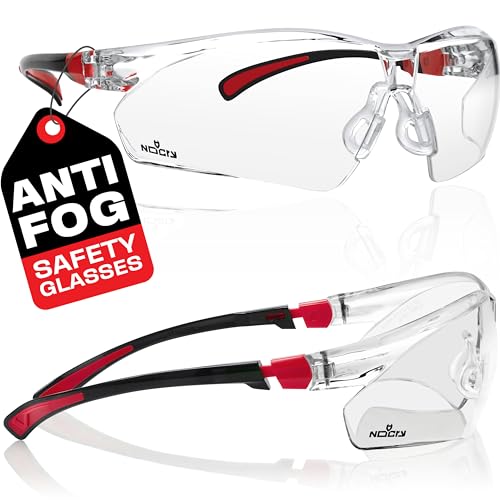
NoCry Clear Safety Glasses for Men and Women with Anti-Fog and...
A chip flying off a lathe cut or a spark off a grinding wheel happens too fast to react to, which is why eye protection is the one piece of gear that has to be on before the machine starts, every time, with no exceptions. These NoCry glasses have anti-fog and scratch-resistant wrap-around lenses, adjustable temples, and full ANSI Z87 certification, which covers both impact resistance and UV. Owner reviews consistently note they stay comfortable for long sessions and do not fog up under a face shield, which matters because glasses are the base layer under a shield, not a replacement for one during grinding.
Check price on AmazonThe three picks at a glance
| Tier | Pick | Price |
|---|---|---|
| Beginner | NoCry Clear Safety Glasses for Men and Women with Anti-Fog and... | $13.99 |
| Intermediate | 3M PELTOR Hearing Protection Ear Muffs | $25.89 |
| Expert | NoCry Premium Safety Face Shield for Grinding and Cutting - Clear... | $35.97 |
Beginner: Best first safety item
Who it is for: Anyone running a lathe, mill, drill press, or grinder who does not already own dedicated eye protection.
NoCry Clear Safety Glasses for Men and Women with Anti-Fog and...
Detailed above. This is not optional gear and it is inexpensive enough that cost is never a reason to skip it. Buy several pairs and keep one at every machine so there is never a reason to start a cut without them on.
Check price on AmazonSkip it if: Grinding operations, where sparks and grit thrown from a wheel need a face shield in addition to glasses, not instead of them.
Intermediate: Buy once
Who it is for: Anyone spending real time at a lathe, mill, or grinder, where motor and cutting noise adds up over a session even when it does not feel loud.

3M PELTOR Hearing Protection Ear Muffs
These 3M PELTOR earmuffs carry a 24 dB noise reduction rating from a hearing protection brand with a long track record, and an over-the-head band that stays comfortable through a long shop session. Hearing damage from shop noise is cumulative and permanent, and unlike a cut or a burn, most people cannot tell it is happening until it already has.
Check price on AmazonSkip it if: Situations where hearing shop sounds, like a change in motor tone or a warning shout, matters as much as blocking noise; an electronic earmuff is the better fit there.
Expert: Performance ceiling
Who it is for: Anyone grinding tool bits, cutting off stock, or using a wire wheel, where flying debris covers more of the face than glasses alone protect.

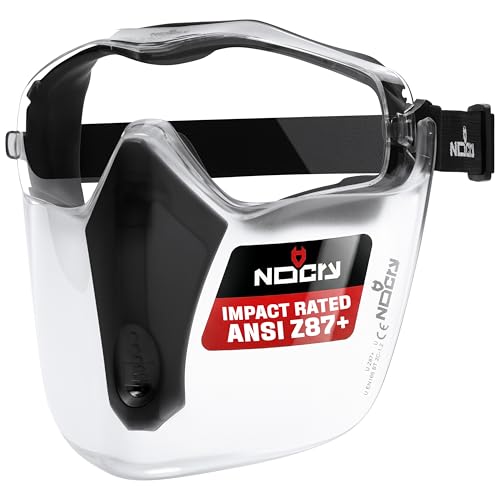
NoCry Premium Safety Face Shield for Grinding and Cutting - Clear...
This NoCry face shield has an anti-fog, impact-resistant visor, adjustable headgear that fits over glasses, and washable sweatbands for repeated use. A face shield does not replace safety glasses underneath it; it adds a second layer that covers the whole face against the wider spray of debris a bench grinder or cutoff wheel throws.
Check price on AmazonSkip it if: General lathe or mill turning, where the debris pattern is smaller and more directional; safety glasses alone are the normal, sufficient protection for that work.
What is the minimum safety gear for running a lathe or mill?
ANSI Z87 rated safety glasses are the non-negotiable minimum for any machine that removes metal, whether that is a lathe, mill, drill press, or bandsaw. Beyond that, the right additional gear depends on the specific hazard: hearing protection for anything with an extended run time, and a face shield for anything that throws debris in a wide pattern rather than a narrow stream.
None of these substitute for the basic shop habits that prevent the worst injuries: no gloves, loose sleeves, or jewelry anywhere near a rotating chuck or spindle, hair tied back, and the chuck key removed from the chuck the moment it is no longer in your hand.
| Task | Minimum gear | Add for extended sessions |
|---|---|---|
| Lathe turning | Safety glasses | Hearing protection |
| Milling | Safety glasses | Hearing protection |
| Bench grinding | Safety glasses + face shield | Hearing protection |
| Cutoff wheel work | Safety glasses + face shield | Hearing protection |
Why does hearing protection matter even for occasional shop use?
Noise-induced hearing loss is cumulative and permanent, and it happens well below the level that feels uncomfortably loud. A mini lathe, a bench grinder, or a shop vac can all sit in a range where regular exposure adds up over months and years even though no single session feels dangerous.
A passive earmuff with a stated noise reduction rating, often written as NRR or SNR, is enough for most home shop noise sources. The rating is a rough guide to how many decibels the earmuff blocks, and higher is generally better for louder tools.
When does a full face shield matter more than safety glasses alone?
Safety glasses stop debris coming straight at the eyes but leave the rest of the face, especially the forehead and cheeks, exposed. A bench grinder throws sparks and grit in a wider spray than a lathe cut does, and a cutoff wheel can throw fragments if it binds or shatters. A face shield worn over safety glasses covers that wider pattern, which is why grinding and cutoff work call for both, not one or the other.
Is electronic or passive hearing protection better for a home shop?
Passive earmuffs simply block sound and are cheaper and simpler, which is fine for anyone who does not need to hear anything else while wearing them. Electronic earmuffs amplify quiet sounds like a machine changing tone or a shout across the shop while still cutting off loud noise above a set threshold, which is useful for a shop that is not always working entirely alone or that wants to keep listening to how a machine sounds while it runs.
Also worth considering
- KLEIN TOOLS 03000 Blade Safety Glasses ($19.98): Klein Tools blade safety glasses: a higher-durability alternative for anyone hard on eyewear.
- Walker's Razor Slim Passive Earmuff - Ultra Low-Profile Earcups -... ($22.99): Walker's Razor Slim passive earmuff: a lower-profile alternative that fits better under some face shields than a bulkier earmuff.
- ARCCAPTAIN Face Shield for Grinding and Cutting ($26.99): ARCCAPTAIN face shield for grinding and cutting: a budget alternative to the NoCry pick above with similar coverage.
- PROHEAR 037 Bluetooth 6.0 Hearing Protection Headphones with... ($35.99): PROHEAR electronic hearing protection: blocks harmful noise while amplifying quieter shop sounds, useful for anyone who needs to stay aware while running loud tools.
More options across the price range
Chosen as an even spread from the cheapest to the most expensive listing in this category.



How we chose
These picks come from comparing ANSI and NRR certifications, stated coverage and fit, and verified owner reviews, not from wearing any of this gear ourselves while machining. Items without a stated ANSI Z87 or equivalent rating for eye protection, or a stated NRR for hearing protection, were passed over regardless of price, since the rating is the only objective evidence the gear does its job.
The tiers here are organized by hazard rather than by a single product line, because safety gear for a home shop is not one purchase; it is a small set of items that each protect against a different specific risk, and skipping any one of them for cost reasons is a bad trade against how cheap they all are.
Buying tips
Should safety glasses be worn under a face shield?
Yes, always. A face shield protects the wider face but is not rated as primary eye protection on its own in most cases, and gaps around the edges of a shield can still let debris through to unprotected eyes.
How do I pick between anti-fog and standard lenses?
Anti-fog coating is worth the small price difference for anyone wearing glasses under a face shield or in a shop that gets warm, since fogged lenses get pulled up or off mid-task, which defeats the purpose entirely.
What NRR rating is enough for a home shop grinder or lathe?
An NRR in the 24 to 33 dB range covers most home shop tools well. Very loud tools or extended sessions benefit from the higher end of that range or from doubling up with foam earplugs underneath earmuffs.
How often should safety glasses be replaced?
Replace them as soon as the lens is visibly scratched, since scratches scatter light and reduce visibility right when clear vision matters most, and a scratch can also be a sign the impact-resistant coating has been compromised.
Get these picks by email
Every item on this page with its current price in one email, so you can buy the shop in stages. No sales sequence.
Used only to send the list.Frequently asked questions
Are safety glasses enough protection for lathe work?
For most turning operations, yes. A lathe cut throws chips in a fairly narrow, predictable direction, so ANSI Z87 rated safety glasses are the standard, sufficient protection. A face shield becomes worth adding for interrupted cuts, parting off, or any operation known to throw material more widely.
Why do bench grinders need a face shield in addition to glasses?
A grinding wheel throws sparks and grit in a wide fan pattern that safety glasses alone do not fully cover, exposing the forehead, cheeks, and neck. A face shield worn over safety glasses adds that missing coverage, which is why grinding is one of the few home shop tasks that calls for both together.
What does an NRR rating on hearing protection actually mean?
NRR, noise reduction rating, is a laboratory-tested estimate of how many decibels an earmuff or earplug blocks under ideal conditions. Real-world reduction is usually somewhat lower than the stated number, so a 30 dB NRR earmuff is a reasonably conservative choice for a genuinely loud tool.
Can jewelry or loose clothing really cause a serious injury near a lathe?
Yes, and it is one of the most common causes of serious shop injuries. A ring, a loose sleeve cuff, or a shirt string can catch on a rotating chuck or spindle in an instant and pull a hand or arm in before there is any time to react, which is why the rule is simple and absolute: none of that near a running machine.
Is it safe to skip hearing protection for quick jobs?
It is common, but the risk is cumulative rather than immediate, which makes it easy to underestimate. A few minutes of loud grinding here and there adds up over months, and unlike most shop injuries, hearing damage does not heal, so keeping a pair of earmuffs within arm's reach removes the excuse to skip them.
Keep going
Researched from published manufacturer specifications, listing details and verified owner reviews. Not hands-on testing and not professional advice. How we research.