The Bucktool 6 inch low-speed bench grinder at $83.29 is the pick for grinding HSS lathe tools: its 1750 RPM low-speed motor and wobble-free wheels give the control a hand-ground tool edge needs, without the risk of burning the temper that a fast, cheap grinder carries.

BUCKTOOL 6" 1/3HP Low Speed Bench Grinder
Most home shops buy a bench grinder before they buy a mill, and the same grinder that sharpens a chisel is often pressed into service on HSS lathe tool bits, where speed and wheel accuracy matter far more. This Bucktool runs at a genuine low speed, around 1750 RPM rather than the 3450 RPM common on cheaper grinders, which gives more time to feel heat building in the tool before it reaches the edge. Its wheels are specifically balanced to run true, which matters because a wobbling wheel makes it hard to hold a consistent angle freehand, the way most HSS lathe tools are actually ground. Owner reviews on low-speed grinders in this class repeatedly credit the slower RPM with letting them grind a tool shape without discoloring the edge, which is the clearest sign the temper has not been drawn out.
Check price on AmazonThe three picks at a glance
| Tier | Pick | Price |
|---|---|---|
| Beginner | WEN BG4276 2.1-Amp 6-Inch Single Speed Bench Grinder with Flexible... | $60.33 |
| Intermediate | BUCKTOOL 6" 1/3HP Low Speed Bench Grinder | $83.29 |
| Expert | BUCKTOOL 8" 3/4HP Low Speed Bench Grinder fit CBN Wheel | $176.80 |
Beginner: Best first grinder
Who it is for: Someone who does not yet own a bench grinder and needs one for general shop use, including occasional HSS tool touch-ups.
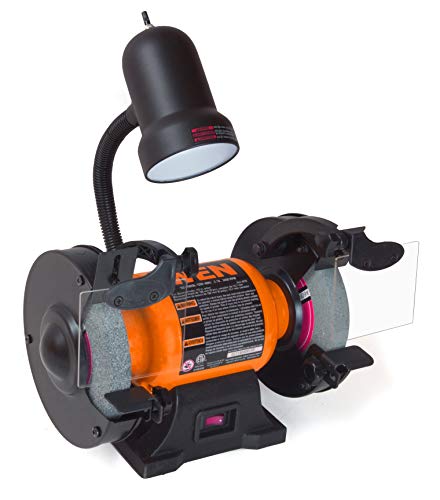
WEN BG4276 2.1-Amp 6-Inch Single Speed Bench Grinder with Flexible...
This WEN 6 inch single-speed grinder is an inexpensive, solid entry point with a flexible work light and enough power for general grinding and light tool sharpening. Single speed means one RPM setting, so care and frequent quenching matter more than on a low-speed model.
Check price on AmazonSkip it if: Frequent HSS lathe tool grinding, where the higher fixed speed raises the risk of burning an edge if the operator is not careful about dwell time on the wheel.
Intermediate: Buy once
Who it is for: A hobby machinist grinding HSS lathe tools regularly and wanting a grinder built for that job specifically, not a generalist tool pressed into service.
BUCKTOOL 6" 1/3HP Low Speed Bench Grinder
Detailed above. Low speed and wobble-free wheels are the two features that most directly improve HSS tool grinding results, and this grinder has both without stepping up to an industrial price.
Check price on AmazonSkip it if: A shop that only ever grinds carbide or does rough metal grinding; low speed is a disadvantage there, since those jobs want more wheel surface speed, not less.
Expert: Performance ceiling
Who it is for: A shop grinding HSS tools often enough to want a dedicated low-speed grinder set up to run a CBN wheel permanently.

BUCKTOOL 8" 3/4HP Low Speed Bench Grinder fit CBN Wheel
This Bucktool 8 inch, 3/4 HP low-speed grinder is built and marketed specifically to run a CBN grinding wheel, which stays flat and cool-cutting far longer than a standard aluminum oxide wheel. Pairing a low-speed grinder like this with a CBN wheel is close to the ceiling of what a home shop needs for HSS tool grinding: minimal heat, a wheel that never needs truing, and enough motor power to hold speed under load.
Check price on AmazonSkip it if: A shop on a budget or one that only grinds tools occasionally; the CBN wheel upgrade this grinder is built for costs more than most standard aluminum oxide wheels combined.
Why does low speed matter for grinding HSS lathe tools?
High speed steel holds its cutting edge because of heat treatment, and enough friction heat from grinding can draw that temper right back out, leaving a soft edge that dulls almost immediately in use. A standard 3450 RPM grinder moves the wheel surface fast enough that a moment of inattention can discolor and soften an edge before the operator notices.
A low-speed grinder, typically around 1750 RPM, cuts the same wheel surface speed roughly in half, which gives more margin to feel heat building and pull the tool back to quench it in water before any damage is done. This is the single biggest reason hobby machinists specifically seek out low-speed grinders for HSS tool work rather than using a standard grinder from the wood shop.
| Grinder speed | Typical RPM | Best for |
|---|---|---|
| Low speed | 1725 to 1750 | HSS lathe tool grinding, fine edge work |
| Standard speed | 3450 to 3600 | General grinding, rough shaping, wire wheel work |
| Variable speed | 1725 to 3450 | Both jobs on one machine, at a higher price |
Standard aluminum oxide wheel or CBN wheel: which is worth it?
A standard aluminum oxide wheel is inexpensive and grinds HSS tools fine as long as it is kept dressed flat and true, since a wobbling or glazed wheel makes consistent angles harder to hold and generates more heat. It does wear and need periodic dressing.
A CBN, cubic boron nitride, wheel is bonded to a steel core that stays perfectly round and flat for the life of the wheel, cuts cooler because the abrasive itself sheds heat better, and never needs dressing. The tradeoff is price, often two to three times a standard wheel, which is why it tends to show up as an upgrade on a dedicated tool-grinding setup rather than a first grinder purchase.
What wheel grit fits roughing versus finishing an HSS tool bit?
A coarser wheel, in the 36 to 46 grit range, removes metal quickly and is the right choice for establishing the rough shape and relief angles on a new tool bit or reshaping a badly worn one. A finer wheel, 60 grit and up, or an 80 to 180 grit CBN wheel, is for the final edge pass, producing a cleaner cutting edge with less heat generated per pass. Many grinders sold as a pair come with one wheel of each grit already mounted, one on each side, which covers both steps without buying extra wheels.
Does grinder horsepower or wheel diameter matter more for tool grinding?
For HSS lathe tool grinding, wheel diameter and speed matter more than raw horsepower, since the cutting job is light compared to what a grinder does shaping large castings or removing weld beads. An 8 inch wheel offers a bit more flat grinding surface and slightly higher wheel surface speed at the same RPM than a 6 inch wheel, which some machinists prefer, but a 6 inch low-speed grinder handles HSS tool bits perfectly well.
Also worth considering
- VEVOR Bench Grinder ($63.90): VEVOR 6 inch low-speed grinder, 1750 RPM: a lower-cost way into the same low-speed advantage as the Bucktool pick.
- JET 8" Bench Grinder - LED Lights ($149.00): JET 8 inch bench grinder with LED lights and coolant tray: a premium standard-speed option from a trusted industrial brand, with a built-in coolant tray for quenching tools between passes.
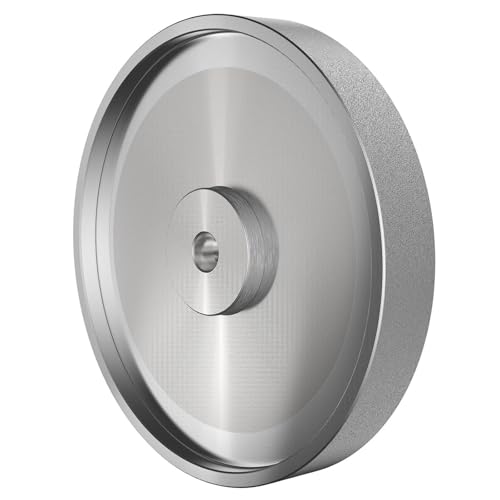
- MORESUPERHARD CBN Grinding Wheel 8 Inch 180 Grit ($89.99): CBN grinding wheel, 8 inch, 180 grit: a direct upgrade for an existing 8 inch grinder that never needs dressing and cuts cooler than aluminum oxide.
- POWERTEC CBN Grinding Wheel 8 Inch 180 Grit ($135.99): POWERTEC 8 inch CBN grinding wheel, 180 grit: a well-reviewed alternative CBN wheel brand at a mid-range price.
More options across the price range
Chosen as an even spread from the cheapest to the most expensive listing in this category.


How we chose
These picks come from comparing published RPM, motor power, and wheel compatibility against Amazon listing details and verified owner reviews, not from grinding tools on any of these machines ourselves. Grinders with recurring reviews about wobbling wheels or motors that bog down under light pressure were passed over.
The emphasis on low speed reflects how HSS tool grinding actually fails in practice: not from a weak motor, but from too much wheel speed and not enough attention to heat, which a genuinely low-speed grinder makes much easier to avoid.
Buying tips
What tool rest angle works for a lathe tool bit?
Most HSS turning tools are ground with relief angles in the 8 to 15 degree range depending on the tool and the material being turned. A tool rest that tilts and locks at an angle makes repeating that angle across multiple grinding sessions much easier than eyeballing it freehand every time.
How often should a standard wheel be dressed?
As soon as it starts to glaze, load up with metal, or grind unevenly, which shows up as increased heat and chatter. A wheel dresser is a cheap accessory worth buying alongside any grinder using standard aluminum oxide wheels.
Should I quench the tool bit while grinding?
Yes, frequently. Dipping the tool in water every few seconds of grinding is the standard technique for keeping the edge from overheating, and it matters more than almost any other single habit for preserving the temper on an HSS bit.
Is a variable speed grinder worth the extra cost over a fixed low-speed model?
It depends on whether the same grinder needs to double for rougher, higher-speed jobs like wire wheel cleanup or shaping. A shop that only grinds HSS tools is well served by a fixed low-speed grinder at a lower price; a shop wanting one grinder for everything benefits from variable speed.
Get these picks by email
Every item on this page with its current price in one email, so you can buy the shop in stages. No sales sequence.
Used only to send the list.Frequently asked questions
Why does grinding an HSS tool too fast ruin the edge?
Speed generates friction heat, and HSS holds its hardness from a heat treatment process that can be undone by enough heat at the edge. A tool ground too hot loses its temper right where the cutting edge needs to be hardest, which shows up as an edge that dulls almost immediately once back in the lathe.
What RPM counts as a low-speed bench grinder?
Around 1725 to 1750 RPM is the common low-speed rating, roughly half the 3450 RPM standard speed most bench grinders run. That lower RPM cuts wheel surface speed proportionally, giving more time to notice heat building before it damages the tool edge.
Is a CBN wheel worth buying for occasional tool grinding?
Probably not for occasional use; a standard aluminum oxide wheel, kept dressed, does the job fine at a fraction of the price. CBN wheels earn their cost for a shop grinding tools often enough that never needing to dress the wheel, and the cooler cutting action, save real time and reduce burned edges.
Can a standard 3450 RPM grinder be used for HSS tool grinding safely?
Yes, with more care: light passes, frequent water quenching, and close attention to any color change in the steel, which signals heat damage starting. A low-speed grinder makes this easier by giving more margin for error, but a standard-speed grinder used carefully still produces a good edge.
What grit wheel should a beginner start with for lathe tool grinding?
A medium grit around 46 to 60 is a reasonable single-wheel starting point, coarse enough to reshape a tool in a reasonable time and fine enough to leave a usable edge. Many grinders ship with two different grits, one per side, which covers rough shaping and finishing without buying a second wheel.
Keep going
Researched from published manufacturer specifications, listing details and verified owner reviews. Not hands-on testing and not professional advice. How we research.