The AFA Tooling deburring tool with 11 HSS blades at $9.99 handles most drilled and cut edges in one swiveling handle, and a basic Devvicoo file set at $15.99 covers what the deburring tool cannot reach.

AFA Tooling Deburring Tool
A swiveling blade rides along the contour of a hole or edge and pulls the burr off in one pass instead of scraping at it flat-bladed. Eleven M2 high speed steel blades give more edge life than the cheapest budget tools, and the CNC anodized aluminum handle stays comfortable through a long session of deburring drilled holes. This is the tool to reach for immediately after drilling or cutting, before a burr gets a chance to cut a hand later.
Check price on AmazonThe three picks at a glance
| Tier | Pick | Price |
|---|---|---|
| Beginner | Bonsicoky 4PCS Countersink Chamfer Deburring Tool Set | $9.49 |
| Intermediate | AFA Tooling Deburring Tool | $9.99 |
| Expert | AFA Tooling Deburring Tool Set & 2 Countersink Hand Reamers | $39.99 |
Beginner: Best first tool
Who it is for: someone deburring the occasional drilled hole or cut edge who wants one simple, cheap tool

Bonsicoky 4PCS Countersink Chamfer Deburring Tool Set
The Bonsicoky 4-piece countersink and chamfer set at $9.49 handles both deburring a drilled hole and cutting a light chamfer for a fastener head, useful for a shop just starting to build up finishing tools.
Check price on AmazonSkip it if: a long edge or cut line, where a swivel-blade deburring tool clears material faster
Intermediate: Buy once
Who it is for: a hobbyist deburring holes and cut edges regularly after drilling, tapping, and sawing
AFA Tooling Deburring Tool
The AFA Tooling swivel-blade deburring tool at $9.99 with 11 replaceable HSS blades is the workhorse for clearing burrs off drilled holes and cut edges quickly, and worn blades swap out cheaply rather than replacing the whole tool.
Check price on AmazonSkip it if: countersinking a fastener recess; pair it with a separate countersink bit for that job
Expert: Performance ceiling
Who it is for: a machinist who wants a full finishing kit covering deburring, countersinking, and hand reaming in one purchase

AFA Tooling Deburring Tool Set & 2 Countersink Hand Reamers
The AFA Tooling deburring tool set with 2 countersink hand reamers at $39.99 adds hand reamers for cleaning up a bored hole edge to the same reliable swivel-blade deburring tool, covering more finishing tasks from one case.
Check price on AmazonSkip it if: a beginner who only occasionally deburrs a hole; the basic swivel tool alone covers most early project needs
Why bother deburring at all?
Drilling, sawing, and tapping all leave a raised lip of displaced metal at the edge of the cut, called a burr. Burrs are sharp enough to cut skin, they interfere with a part seating flush against another surface, and on a threaded hole a burr can distort the first thread or make a bolt cross-thread on entry.
A few seconds with a deburring tool or file after every cut prevents all three problems and is one of the cheapest habits to build into a shop routine.
| Edge type | Best tool | Why |
|---|---|---|
| Drilled hole | Swivel-blade deburring tool | Follows the round edge in one pass |
| Sawn or sheared edge | File | Flat contact removes a straight burr evenly |
| Countersunk fastener hole | Countersink bit | Cuts a controlled chamfer, not just a burr removal |
| Tapped hole entrance | Deburring tool or countersink | Prevents a burr from cross-threading the first turn |
Deburring tool, file, or countersink: which one do I need?
A swivel-blade deburring tool is the fastest option for round holes and curved edges, since the blade pivots to follow the contour without gouging. A file works best on straight or flat edges, like a sawn bar end, where a file's flat face contacts evenly along the whole length.
A countersink bit is a different job entirely: it cuts a deliberate conical chamfer, usually so a flat-head screw sits flush, rather than just knocking off a burr. Many shops keep all three, reaching for whichever matches the edge in front of them.
What file cut and shape do I actually need?
File "cut" refers to tooth coarseness: a bastard cut removes material fast for rough shaping, a second cut is a common middle ground for general use, and a smooth cut leaves a fine finish for final touch-up. Shape matters for what the file can reach: flat files handle straight edges, half-round files handle both flat and concave curves, round (rat-tail) files handle holes and inside curves, and triangular files get into corners and can clean up burrs at the root of a slot.
A basic set with a flat, half-round, round, and triangular file in a second or bastard cut covers the great majority of hobby finishing work.
How do I deburr a tapped hole without ruining the thread?
A light countersink or a single pass with a deburring tool at the entrance of a tapped hole, done before tapping or very gently after, knocks off the sharp edge without touching the threads themselves. Forcing a full-size file or an aggressive countersink into a tapped hole risks damaging the first few threads, so keep the tool shallow and check work often.
See the how to tap a hole guide for where deburring fits into the full tapping sequence.
Also worth considering
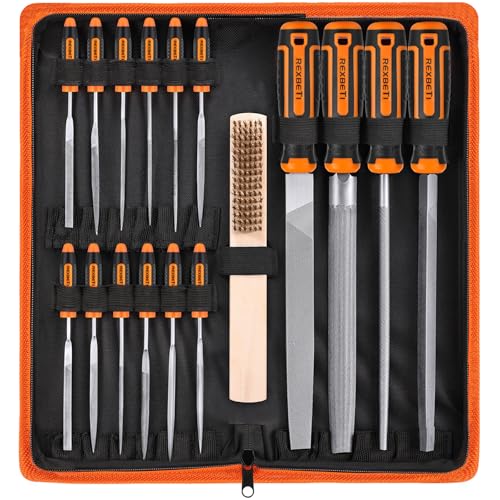
- Devvicoo Metal File Set ($15.99): A 17-piece file set at $15.99 for filing flat edges, rounding corners, and cleaning up saw cuts that a deburring tool cannot reach into.
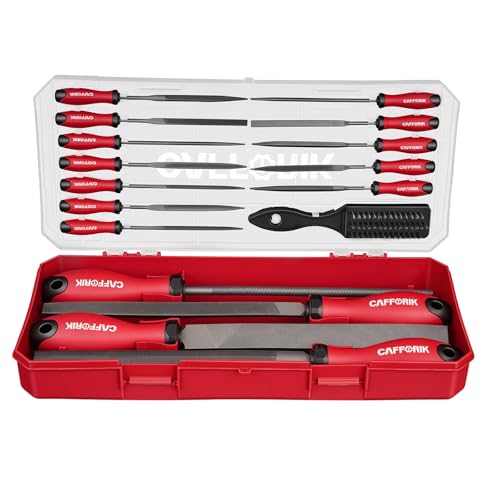
- SOWKIPE 13-Piece Needle File Set ($9.49): A 13-piece needle file set at $9.49 for detail work in tight spots, small slots, and fine finishing that a full-size file is too large for.
- PFERD 8" Machinists 5pc File Set ($73.63): A PFERD 5-piece machinist file set at $73.63 for anyone who wants genuinely durable, well-cut files that hold an edge far longer than budget sets.
- BIG HORN 19555 3-in-1 Countersink Set - 3 Interchangeable Cutters -... ($14.24): A 3-in-1 interchangeable countersink set at $14.24 for chamfering fastener holes in a range of angles from one handle.
More options across the price range
Chosen as an even spread from the cheapest to the most expensive listing in this category.



How we chose
Every tool and file set here is pulled from current Amazon listings and matched to its published blade material, piece count, and file cut where specified. None of these were run in a shop; the technique guidance on burr removal and file selection follows published machinist reference practice rather than owner testing.
Tools were chosen for blade or file quality relative to price, for coverage of the different edge types a hobby shop actually produces, and for replaceable-blade designs where available, since a worn blade or file is cheaper to replace than a whole new tool.
Buying tips
Do I need a deburring tool if I already own files?
Yes for round holes specifically. A file struggles to get inside a small drilled hole cleanly, where a swivel-blade deburring tool is purpose-built for exactly that edge. Files still cover flat and sawn edges that a deburring tool cannot reach as well.
How often do deburring tool blades need replacing?
A blade dulls gradually with use rather than failing suddenly; when it starts dragging or skipping instead of shaving cleanly, swap it. Sets with multiple replacement blades handle a long time before running out.
Should I use a file card or brush on my files?
Yes, metal filings pack into file teeth and reduce cutting effectiveness if left. A file card (a stiff wire brush made for the purpose) drawn along the file periodically clears packed teeth and extends the file's useful life.
Can I skip deburring on a part that will be painted or coated?
No. A burr under paint or coating still presents a sharp edge and can also cause the coating to chip or crack right at that edge over time. Deburr before any finish is applied.
Get these picks by email
Every item on this page with its current price in one email, so you can buy the shop in stages. No sales sequence.
Used only to send the list.Frequently asked questions
What is the fastest way to deburr a drilled hole?
A swivel-blade deburring tool is the fastest method: set the blade in the hole edge and rotate it around the circumference in one or two passes. For a quick alternative on a soft metal, twisting a slightly oversized drill bit by hand at the hole entrance also knocks off a burr, though less cleanly.
Why does my file skip across the metal instead of cutting?
This usually means the file teeth are packed with filings (load a file card to clear them), the file is too fine a cut for the material, or you are applying pressure on the return stroke, which should be lifted rather than dragged back across the work.
What is the difference between deburring and chamfering?
Deburring removes the sharp, irregular lip left by cutting or drilling and restores a clean edge close to the original profile. Chamfering deliberately cuts a controlled angled surface, often so a fastener head sits flush or two parts mate cleanly, and is a separate, more defined operation usually done with a countersink bit.
Do I need different files for aluminum than for steel?
A general second-cut file works on both, but aluminum can clog file teeth faster since it is soft and gummy. Some shops keep a dedicated file for aluminum and clean it with a file card frequently, or choose a file with wider tooth spacing meant for softer, more ductile metals.
How do I deburr the inside of a tube or thin-wall part?
A small round needle file or the tip of a swivel-blade deburring tool with a fine blade both work for reaching inside a tube. Go slowly and check the wall thickness before removing much material, since thin-wall tubing has little margin before a deburring pass weakens the part.
Keep going
Researched from published manufacturer specifications, listing details and verified owner reviews. Not hands-on testing and not professional advice. How we research.