Enter a size and the converter lists the closest drill in each system. For 0.201 inch it returns #7 exactly, 13/64 inch (0.2031), and 5.1 mm (0.2008).
Covers #1 to #80 number drills, A to Z letter drills, fractional drills in 1/64 steps to 1-5/8 inch, and metric drills from 0.5 mm.
Tools for this job
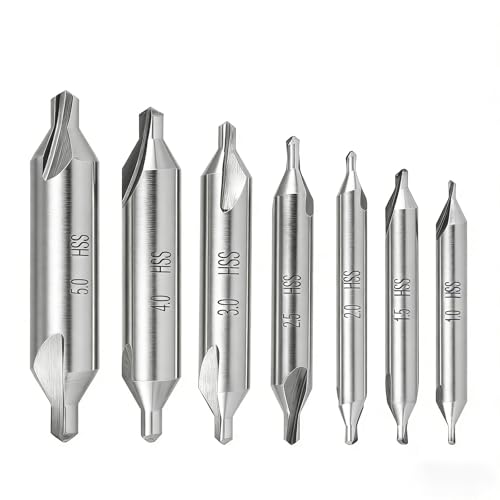
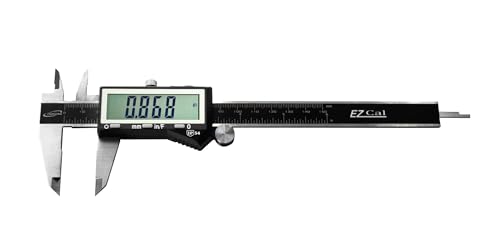
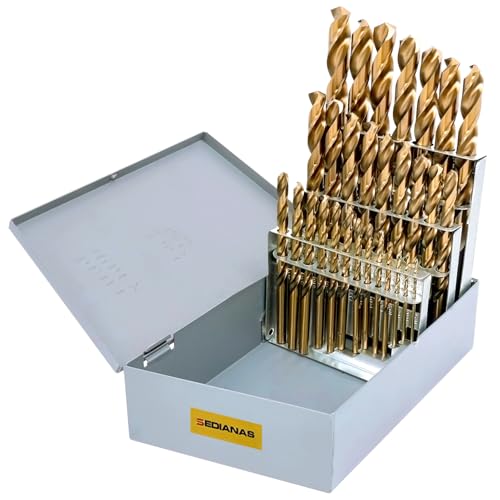
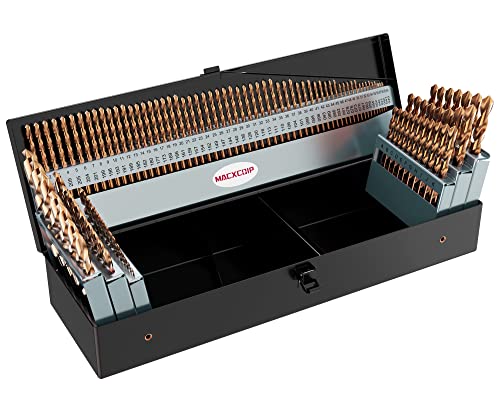
The tooling this calculation is usually for, spread across the price range.


How does the drill size converter work?
Number, letter, fractional and metric drills interleave, so the drill a chart calls for is almost always available in another system within a thousandth or two. That matters when a set is missing one size.
Frequently asked questions
Why do number drills get smaller as the number gets bigger?
Number drills descend from the Stubs steel wire gauge, where a higher gauge number meant wire drawn through more dies and therefore thinner. #1 is 0.228 inch and #80 is 0.0135 inch. Letter drills run the other way, A (0.234) to Z (0.413), continuing upward from where #1 stops.
Is a metric drill close enough to substitute for a number drill?
Usually. Metric drills in 0.1 mm steps sit within about 0.002 inch of almost every number drill, which is inside the oversize a twist drill cuts anyway. For tap drills in hard material, pick the slightly larger substitute rather than the slightly smaller one.
Keep going
Formulas are standard shop math; starting speeds are conservative conventions for hobby machines. Not professional engineering advice. Wear eye protection and keep hands, gloves and sleeves clear of rotating work.